
Mixing Privacy and Your Beautiful Tacoma View
A good view is one of the best parts of many Tacoma homes. Whether you are looking toward Puget Sound, the waterfront, trees, hills, or simply an open part of the neighborhood, the view can be a major part of why the room feels good.
The problem is that the same glass that opens the room to the outside can also make you feel exposed.
A lot of homeowners think they have to choose between privacy and the view. Usually they do not. The better solution is to decide what kind of privacy you need at different times of day and choose treatments that give you more than one level of control.
Daytime Privacy and Nighttime Privacy Are Different
This is the first thing I explain when someone wants to keep a view.
During the day, the outside is often brighter than the inside. Some solar and light-filtering materials can make it harder to see into the room while still allowing you to see out.
At night, the condition reverses. Once the interior lights are on and it is dark outside, a material that felt private during the day may provide very little privacy.
That means a treatment chosen mainly to preserve the daytime view may need a second layer for evening coverage.
Start With the Sightline
Privacy is not only about how transparent the material is. It is also about where someone could actually see into the room from.
A second-story living room may need very little daytime privacy from below. A street-facing bedroom may need much more. A window facing a neighboring house may have a specific sightline that can be interrupted without covering the entire opening.
Before choosing a treatment, look at the window from outside if possible. Think about sidewalks, neighboring windows, decks, driveways, and the height of the room.
Sometimes the solution is simpler once you know exactly what needs to be blocked.
Blinds Give Flexible Sightline Control
Blinds remain useful because the slats can be tilted without raising or lowering the whole treatment.
That lets you redirect the view into the room while still allowing daylight through the window. In a home office or street-facing room, that can be more practical than choosing between fully open and fully closed.
Wood and faux wood blinds can work with a wide range of Tacoma interiors, but the slat size, finish, and amount of trim around the window all affect how they look in the room.
Top-Down Operation Can Be Very Useful
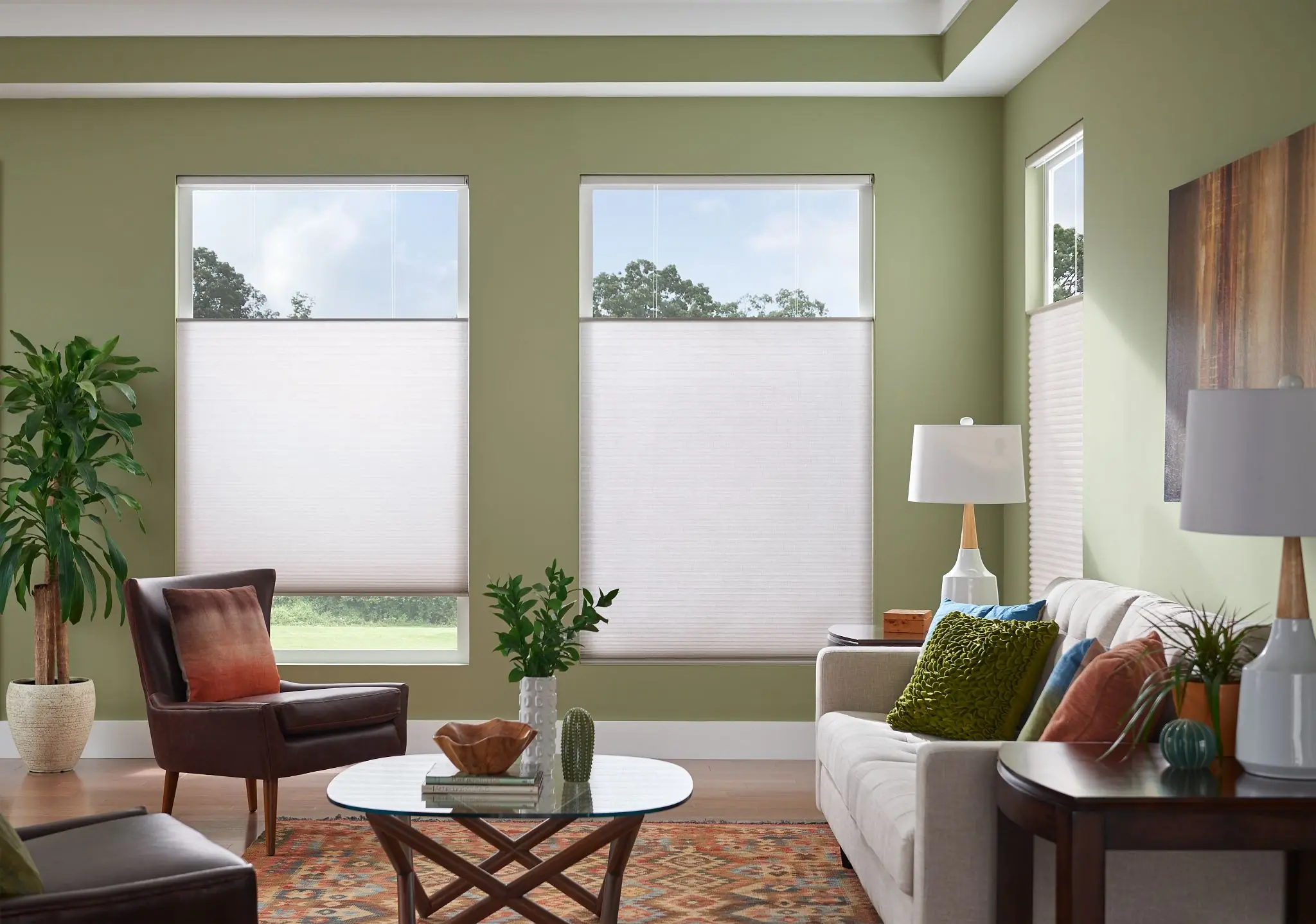
Some cellular and other shade systems offer top-down operation.
That can be a good fit when the privacy problem is mainly at eye level. You can keep the lower portion of the window covered while opening the top to let in daylight and preserve a higher view.
This works especially well in:
- Bedrooms facing a street or sidewalk
- Bathrooms where the lower sightline matters most
- Ground-floor rooms near neighboring homes
- Spaces where you still want daylight from the upper part of the glass
Not every product or window is suited to top-down operation, but it is worth considering when the problem is specifically about the lower part of the view.
Solar Shades Can Preserve More of the Daytime View
If glare is also a problem, a solar shade may give you more daytime visibility than an opaque treatment.
The fabric openness determines how much you can see through it and how much light it filters. A more open fabric generally preserves more view. A tighter fabric generally provides stronger glare control.
The tradeoff is nighttime privacy. A solar shade that gives you a beautiful daytime view should not automatically be expected to provide full privacy after dark.
That is where layering becomes useful.
Light-Filtering Shades Keep the Room Softer
Not every view needs to remain perfectly clear through the treatment.
Light-filtering roller shades, cellular shades, Roman shades, and some woven materials can soften the outside while keeping the room bright and comfortable.
These are often a good fit when the homeowner cares more about maintaining daylight and an open feeling than seeing every detail outside while the shade is down.
The amount of privacy varies by material, so I like to compare the actual sample at the window instead of relying on the label alone.
Drapery Solves the Evening Problem Well
Drapery is one of the easiest ways to add strong evening privacy without giving up the view during the day.
The panels can remain open most of the time, then close when the interior lights come on.
Drapery can also:
- Soften large window walls
- Add color or texture
- Reduce drafts
- Improve the feeling of privacy in bedrooms
- Layer with shades or blinds for more flexible control
The stack space needs to be planned so the panels do not cover more glass than necessary when they are open.
Layering Gives You the Most Flexibility
For many view homes, the strongest solution uses two treatments for two different jobs.
Examples include:
- Solar shades for daytime glare with drapery for nighttime privacy
- Light-filtering shades with side panels
- Blinds for adjustable daytime control with drapery for evening coverage
- A top-down cellular shade for eye-level privacy with a more open upper view
Layering lets you keep the room open when you want it open and close it down when privacy becomes more important.
Motorization Helps When You Actually Use the Treatments Often
A beautiful view often means large windows, tall windows, or several windows grouped together.
If you are adjusting the treatments every morning and evening, motorization can make the routine much easier. Grouped controls can move several shades together, and hard-to-reach windows become much more practical.
This is especially useful when the treatment needs to change with the time of day rather than staying in one position all the time.
Think Room by Room
The same view does not create the same privacy problem everywhere.
A living room may be comfortable with a solar shade during the day and drapery at night. A bedroom may need stronger room darkening and full privacy. A kitchen may need something easy to clean. A home office may need glare control around screens.
You can coordinate the overall look without forcing the same product onto every window.
Compare the Material at the Actual Window
Privacy is one of those things that is hard to judge from a small sample.
Hold the material at the window. Look through it from inside. Look at it from outside if possible. Check it during the day and after the interior lights come on.
That is the only way to understand what "light filtering," "open," or "private" really means in your specific room.
Keep the View, Cover the Problem
You do not have to cover a beautiful window just because privacy matters. Figure out where the sightline is, what changes after dark, and how much of the view you want to keep when the treatment is down.
That may lead to a solar shade, a top-down option, blinds, drapery, or two treatments doing different jobs. The important part is that the room still feels open when you want it open and private when you need it private.